
When I started learning more about financial planning, I quickly realized how much of the language made things harder to understand rather than clearer. This is a simple explanation meant to help you understand advisor compensation, whether or not you ever plan to work with one. If there are other terms or personal finance topics you want unpacked, let me know in the comments.
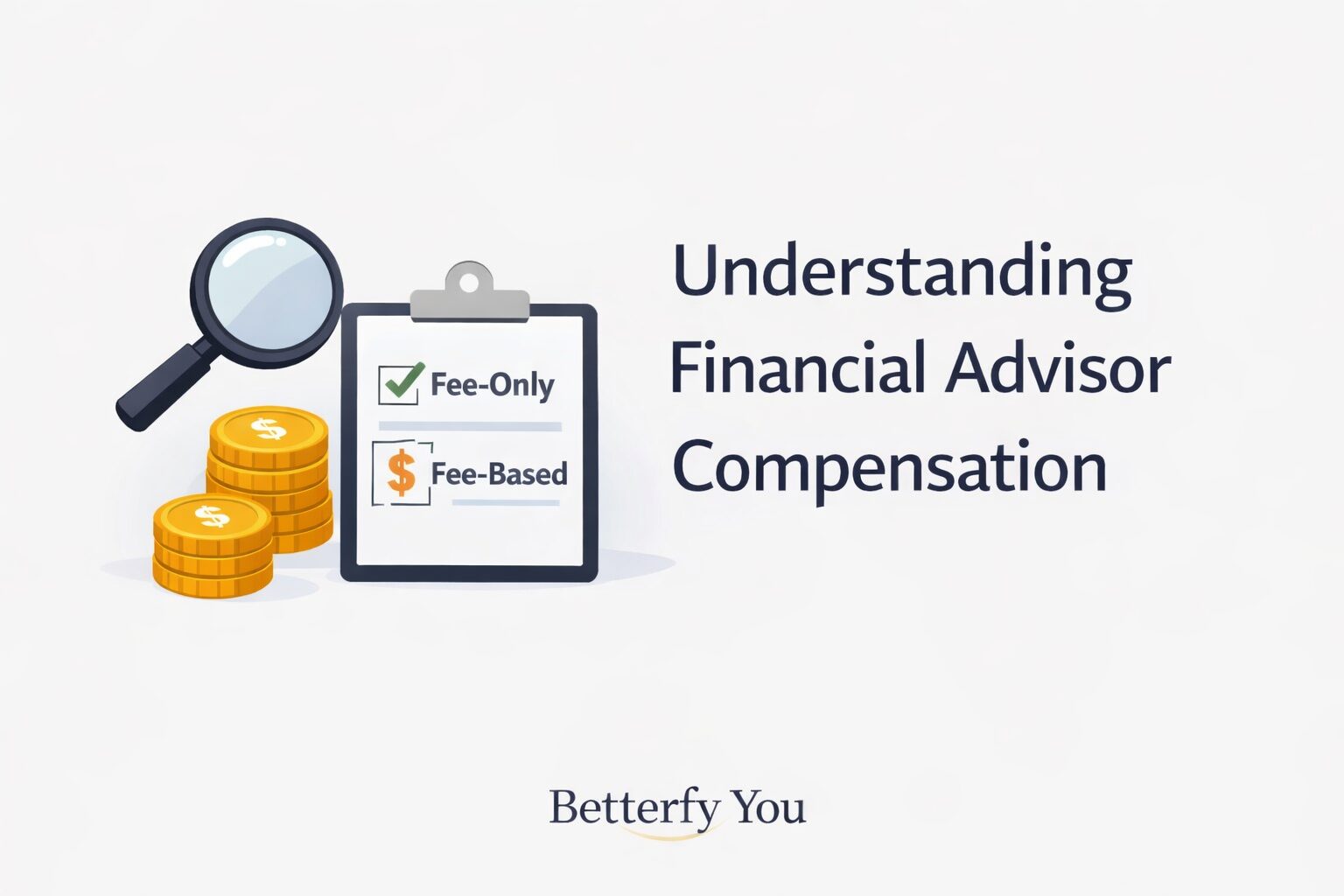
Today, I want to talk about two types of compensation for financial advisors: Fee-only and Fee-based financial advisors.
Fees are often framed as a negative. The reality is more nuanced.
Understanding How Financial Advisors Get Compensated
One of the first things you’ll want to understand, and that any financial advisor should provide to you is how they get compensated. You don’t have to wait until you sign a contract to get access to that. Many advisors link this information on their website, often in a Services page or in a document called Form ADV Part 2A, which is usually linked in the footer. This document outlines how the advisor is compensated, as well as any partnerships or potential conflicts of interest.
But even if they don’t have that visible, you can ask a financial advisor simply, “How are you compensated?”
Fee-Only vs Fee-Based Financial Advisors: What’s the Difference?
Fee-only advisors are compensated only by client fees. They receive a fee for both the financial advice (ongoing, hourly, or flat rate) they give as well as any investment management of a client’s assets, called “AUM” (assets under management). The advisors act as stewards of the assets and help balance portfolios, execute trades, and other requests of the client, and assets are handled by third-party custodians (such as Schwab). The advisor does not receive commissions or product-based commissions and is not compensated for specific stocks, bonds, funds, or other assets that are purchased.
That’s where “fee-based” advisors come in. Fee-based advisors receive both client fees and commissions. They can be compensated based on the products that they recommend to you like specific funds or securities. The advisor may have identified a specific mutual fund that matches your exact needs, they might help you get the exact insurance policy for your portfolio, or other asset types. They serve more as a central place to get things done regarding your financial path. This does not automatically mean a fee-based advisor is acting against your interests, but it does mean you should understand how incentives work in the relationship.
Is one model inherently bad and the other good? Not necessarily. What matters most is transparency and your understanding of the relationship. Do you understand how they get compensated? If not, ask clearly. Any advisor should take some time to explain how they are compensated, and often disclosure is required and regulated.
How Advice-Only Financial Advisors are Different from Fee-Only Financial Advisors
Advisors who are compensated based on just their advice are a subset of fee-only – fee-only is the umbrella. Advice-only advisors don’t manage investments or assets for their clients. They design and deliver a financial plan, and work with the client to implement the plan, and it’s up to the client to make final decisions and purchases regarding specific investments, vendors, and other partners.
Who is a Fiduciary Financial Advisor and Why Does it Matter?
A fiduciary is legally obligated to act in the best interest of another party, putting the beneficiary’s financial needs above their own.
Not all financial advisors are fiduciaries.
This is also something you can ask (and usually see on their websites). Be careful to note the difference between “Regulation Best Interest (Reg BI)” which is a lower, SEC-mandated standard for broker-dealers that requires acting in the client’s best interest at the time of recommendation, allowing potential conflicts of interest.
This doesn’t mean advisors who are not fiduciaries can’t be serving your best interests. But it does mean that they have subscribed to a different type of oath and ethics, and they might be operating under multiple regulatory frameworks.
Understanding which standard an advisor operates under helps you ask better questions, not draw quick conclusions.
The Bottom Line
Advisor compensation can feel technical, but it ultimately shapes how advice is delivered and how decisions are made. Taking the time to understand these differences is not about being skeptical or defensive. It is about being informed.
You are allowed to ask questions. You are allowed to take your time. And you are allowed to decide that learning more is the right next step, whether or not you ever work with an advisor.
Leave a Reply